
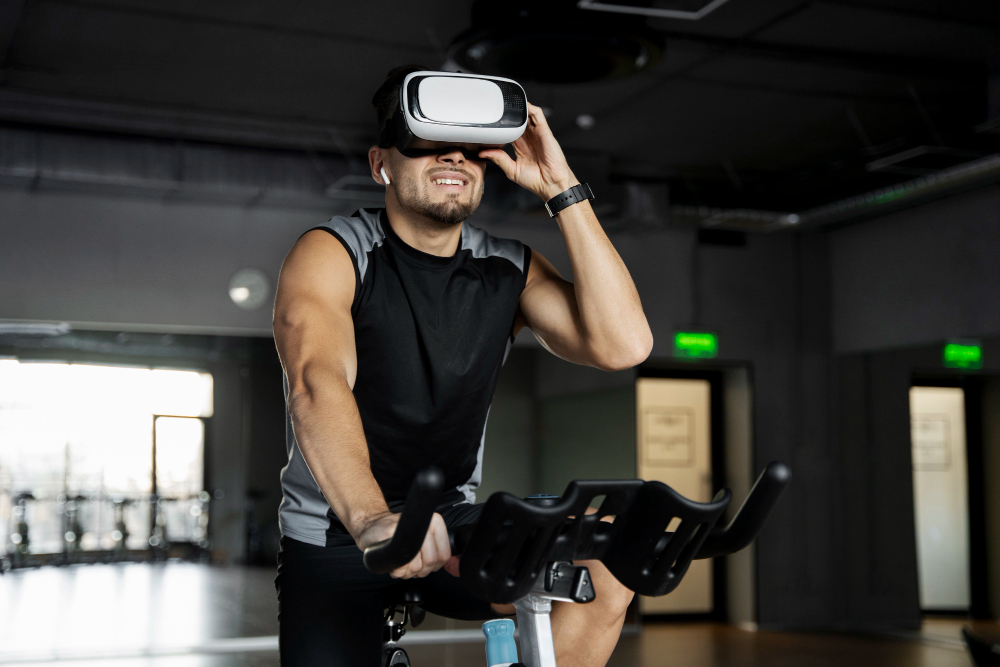
From VR Training to Smart Gear: How Tech Is Revolutionizing Sports Performance
The world of sports is undergoing a technological transformation unlike anything seen before. From virtual reality (VR) simulations to AI-powered wearables, technology is helping athletes train smarter, recover faster, and perform better. In 2025, the intersection of innovation and athleticism is creating a new era of performance optimization.
Let’s explore how these advancements are revolutionizing the way athletes train, compete, and push human limits.
🧠 1. Virtual Reality (VR) Training: Sharpening the Mind and Body
VR technology is no longer confined to gaming — it’s now a game-changer for athletes.
How it helps:
- Simulates real-game environments for mental conditioning.
- Helps athletes visualize plays, strategies, and decision-making scenarios.
- Reduces physical fatigue by allowing mental repetitions in virtual environments.
For example, footballers use VR to practice penalty kicks, while baseball players train their batting reflexes using 3D simulations. The result? Enhanced confidence and faster reaction times on the field.
⚙️ 2. AI and Machine Learning in Performance Analysis
Artificial Intelligence (AI) is now a vital coaching assistant in modern sports.
AI systems can:
- Analyze performance data in real time.
- Identify weaknesses and suggest targeted improvements.
- Predict injury risks based on workload and biomechanical patterns.
Athletes and teams use these insights to design personalized training programs, ensuring efficiency, safety, and precision in every session.
📲 3. Smart Wearables: Data at Your Fingertips
Smart gear — from connected shoes to biometric clothing — is redefining athletic monitoring.
Popular innovations include:
- Smart watches tracking heart rate, recovery time, and calories burned.
- GPS vests measuring distance, sprint speed, and acceleration.
- Smart fabrics that monitor temperature, hydration, and muscle activity.
This real-time feedback helps athletes fine-tune their performance instantly, bridging the gap between training and peak competition.
🩺 4. Biomechanics and Motion Capture Technology
Biomechanical sensors and motion capture cameras have revolutionized how coaches understand movement.
Applications include:
- Analyzing running posture, stride length, and joint angles.
- Detecting flaws in technique that could lead to injury.
- Measuring efficiency in sports like sprinting, swimming, and tennis.
By integrating this data with AI software, athletes can optimize movement efficiency and reduce injury risks, enhancing both power and precision.
🧬 5. Recovery Technology and Sports Science
Performance doesn’t stop at training — recovery is just as crucial.
Modern recovery tech includes:
- Cryotherapy chambers to reduce inflammation.
- AI-driven recovery systems analyzing sleep and fatigue levels.
- Smart compression gear that enhances circulation and muscle repair.
These tools ensure that athletes recover faster, train harder, and maintain consistent peak form throughout the season.
🏋️ 6. Augmented Reality (AR) Coaching and Visualization
AR overlays are giving athletes real-time guidance like never before.
Imagine wearing smart glasses that display your posture, target zones, and motion feedback during a workout. Coaches can use AR to:
- Show live corrections in form.
- Project tactical plans during team drills.
- Analyze training from multiple angles in real time.
This immersive, data-driven coaching environment enhances focus, feedback, and efficiency.
🧠 7. Big Data and Predictive Analytics
With advanced data analytics, every action on the field is measurable and optimizable.
In 2025, teams use big data to:
- Predict outcomes based on player stats and historical performance.
- Identify fatigue patterns and schedule rest cycles.
- Compare athletes’ development over time.
This analytical approach allows teams to make evidence-based decisions, giving them a strategic advantage in high-stakes competitions.
🏟️ 8. Smart Equipment: The Future of Athletic Gear
Smart gear is taking performance tracking to the next level.
Examples:
- Connected basketballs and footballs that record spin, speed, and trajectory.
- Smart rackets that analyze shot precision and impact zones.
- AI-driven helmets monitoring brain health in contact sports.
These innovations make training more measurable, safer, and scientifically guided, ensuring continuous improvement.
🌐 9. Tech-Enhanced Coaching and Athlete Collaboration
Technology is strengthening communication between athletes, coaches, and sports scientists.
AI-driven dashboards compile performance metrics, allowing coaches to design training programs tailored to each athlete’s physiology and goals. Meanwhile, cloud platforms enable instant sharing of performance reports and video analysis — even across continents.
This global, connected approach to sports science is creating smarter athletes and smarter teams.
🚀 10. The Future: Human Performance Meets Digital Intelligence
The future of sports lies in the harmony between human skill and digital intelligence.
As AI, robotics, and data analytics evolve, athletes will continue to break boundaries once thought impossible. From personalized nutrition to neural training interfaces, the next generation of technology promises to make athletes faster, stronger, and smarter than ever before.
🌟 Final Thoughts
Technology is not replacing the passion and spirit of sports — it’s amplifying it. From VR training to AI analytics, innovation is helping athletes unlock their full potential and inspire fans around the world.
The future of sports performance is here — and it’s powered by intelligence, data, and dedication.